Most real estate investors lose thousands every year—and not because of bad deals, but because of bad timing.
They wait until April to “see what the accountant says,” only to discover they could have structured that flip, rental, or creative deal differently and kept a lot more of their profit.
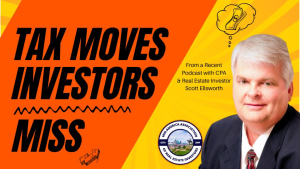
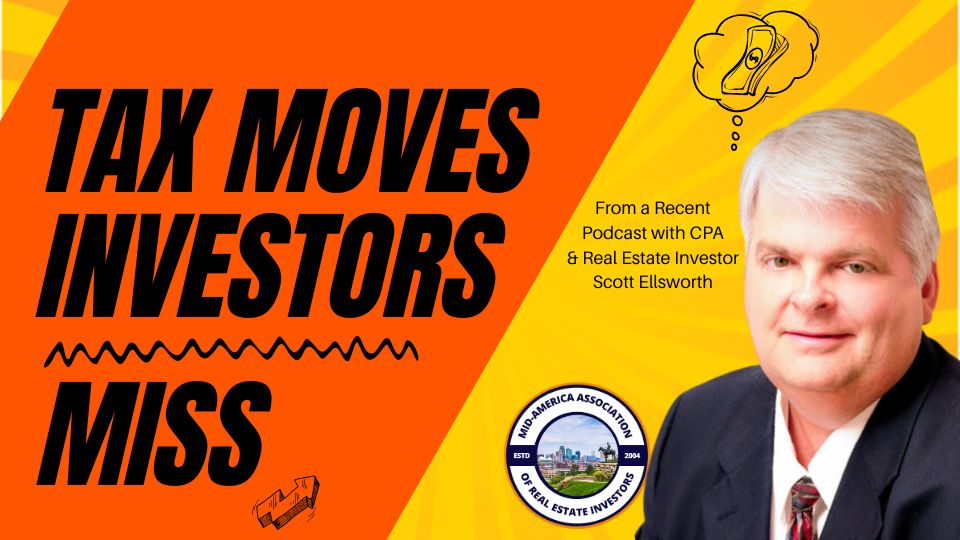
Which is why we’ve been tuning into several podcasts featuring Scott Ellsworth. He’s in a unique position—not only is he a CPA, but he’s also a seasoned real estate investor who’s been out there in the trenches himself. As an active leader at his local REIA, Scott is surrounded by successful investors who rely on his expertise to navigate real-world tax challenges.
He’s not explaining textbook theory; he’s sharing lessons learned from actual deals, actual investors, and actual results. We wanted to pass along a few of our favorite takeaways—and if you want the full story, join us for the Master Class Scott is teaching on December 13th.
Below are some of the most important takeaways investors should know before tax season—and a preview of what Scott will unpack in much greater depth during the class.
Every Strategy Has Its Own Tax Traps (and Opportunities)
Wholesaling, flipping, holding rentals, or selling with owner financing all look like “real-estate deals,” but they’re taxed in completely different ways.
Wholesaling and Flipping – Profits are treated as ordinary income—just like a paycheck—and subject to both income and self-employment taxes unless structured properly.
Rentals – Income is taxed differently but offers powerful write-offs through depreciation, expenses, and long-term capital-gains treatment.
Owner-Financed Deals – These can spread out tax payments using installment-sale treatment, which helps smooth out cash flow and prevent surprise tax spikes.
“You don’t have to spend more money to save on taxes,” Scott explains.
“You just need to spend smarter—buy right, structure right, and record right.”
That’s why understanding when and how you make money is as important as the deal itself. Every transaction tells the IRS a different story—and if you don’t guide that story, they’ll write it for you.
Deductions, Records, and the IRS Paper Trail
One of the simplest ways to keep more of what you earn is to stay organized.
Scott often reminds investors that the IRS doesn’t reward effort—it rewards documentation.
Every expense should tie directly to your investment activity:
Mileage and travel to and from job sites.
Education and coaching related to your real-estate business.
Tools, software, and subscriptions that help you manage properties.
Depreciation and repairs—but know the difference between the two.
“The number-one reason investors lose deductions isn’t that they weren’t legitimate—it’s that they didn’t have the records to back them up,” Scott explains.
And if you’re wondering how long to keep those records?
Seven years is a good rule of thumb, but Scott recommends keeping major documentation (like HUD statements or cost-segregation reports) permanently in digital form.
Structure Your Deals Like a Pro
Entity structure plays a huge role in tax outcomes.
Scott emphasizes that the right structure depends on what you do most—flipping, holding, or lending—and what you want to protect.
LLCs are flexible and simple for rentals or partnerships.
S-Corps can save self-employment tax for active investors.
C-Corps may be useful for certain lending or development businesses.
And thanks to the OBBB, the 20 % Qualified Business Income (QBI) deduction for pass-through entities has now been made permanent—a big win for small-business owners and investors alike.
This allows qualifying investors to continue deducting up to 20 % of their business income, keeping more money in their own pockets rather than Uncle Sam’s.
“You can’t fix bad structure at tax time,” Scott says.
“You have to design it right from day one.”
Bonus Depreciation Is Back—and It’s Big
Thanks to the new One Big Beautiful Bill (OBBB), investors once again have access to 100 % bonus depreciation for most qualifying improvements and equipment placed in service after January 19, 2025.
That means if you qualify, you can deduct the entire cost of eligible property—like appliances, flooring, HVAC units, or fixtures—in the year they’re put into service rather than stretching it over decades.
For buy-and-hold investors, this creates a huge short-term cash-flow advantage.
For flippers and landlords using cost-segregation, it opens the door for faster write-offs that can fund the next project.Those jumping into alternative assets, like oil and gas, might also find this an huge advantage.
“Bonus depreciation isn’t a loophole,” Scott says. “It’s a timing tool. You’re taking deductions you’d get anyway—just sooner, when the cash matters most.”
Your CPA Can’t Save You (Unless You Help Them)
Even the best accountants can only work with the information you give them. And because there is a shortage of good CPAs, most are busy working and just don’t have time to be a tax advisor. That’s why Scott doesn’t want to be your CPA—he wants to be a resource for you and your CPA.
His goal is to help you understand enough to guide your own team—to walk into tax season prepared, confident, and in control.
“If you understand the rules,” Scott says,
“you can tell your CPA what outcome you want—and they can help you get there.”
Pro Tip from Scott Ellsworth, CPA
“Taxes aren’t a punishment—they’re a mirror. They show how you structured your deals.
If you don’t like what you see at tax time, it’s time to change your structure.”
Learn How to Keep More of What You Earn
If you buy, flip, or hold property, this is the training that could pay for itself many times over.
Join CPA Scott Ellsworth for the
Online Master Class: Real Estate Taxes for Smart Investors
Saturday, December 13 | 8 AM – 2 PM (Central)
You’ll learn:
✔️ How different deal types are taxed—and how to plan ahead.
✔️ Which deductions and records the IRS actually cares about.
✔️ What’s new under the One Big Beautiful Bill and how to use it.
✔️ How to structure entities for both protection and profit.
Don’t wait until tax time to find out what you missed.
Reserve your seat at MAREI.org/Calendar and start making the IRS rules work for you instead of against you.

Scott Ellsworth
Scott has been a CPA for 35+ years. He has also served as COO and CFO of numerous companies during his career. In addition to being a CPA, Scott is an active real estate investor. He enjoys assisting real estate and business clients in tax and business strategies to lower taxes and increase wealth.
Currently he is helping clients with a advisor program call the Tax Strategy Network. Click Scotts photo to learn more about it.