Episode 110 • Podcast
Always Include These in Your Lease
If you're providing appliances, a lawnmower, or anything else that can walk out the door — your lease must address it. Here's exactly what to include and why.
What We Discussed in This Episode
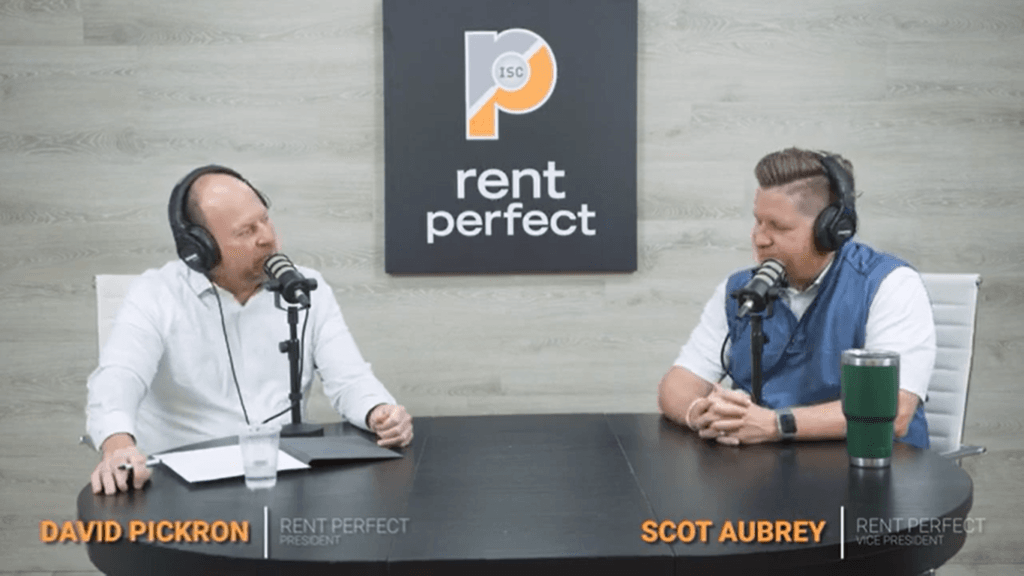
In Episode 110 of the Rent Perfect Podcast, David and Scott dig into a question every landlord eventually faces: should you provide appliances or other personal property to your tenants — and if you do, what does your lease need to say about it?
The conversation was sparked by a real situation David encountered when renting to a tenant going through a divorce. The tenant asked a simple question — "Can you provide a washer and dryer?" — and it opened up a much bigger discussion about the risks landlords take on when they include personal property with a rental.
The Landmine: Providing Appliances Without Lease Protection
Whether it's a washer and dryer, a lawnmower, a water softener, or even a TV — if you leave it at the property, you need to think through what happens when it breaks, disappears, or gets damaged. David shares a hard truth that catches many landlords off guard:
"If they put their own washer and dryer in and it breaks, it's their baby. I don't even get a phone call. But if it's my washer and dryer and it breaks — I've become the appliance repair man. And I don't want to be the appliance repair man."
The same principle applies to short-term rentals. David's wife loves to provide extras — fire pits, propane grills, all the amenities that make a vacation memorable. But those extras come with their own headaches: a drained propane tank mid-cookout, a bad review, and a guest complaint. Sometimes not providing something at all is better than providing it poorly.
What Your Lease Must Cover
If you decide to include any personal property with your rental — whether it's a long-term, mid-term, or short-term unit — your lease needs to clearly address three things:
- Ownership. State explicitly that you, the landlord, own the item. "The washer and dryer shall remain the property of the owner." This matters if a tenant tries to walk out with it.
- Maintenance responsibility. Spell out who is responsible for repairs and upkeep. David's lease language puts all maintenance on the tenant — if the washer breaks, they fix it. If it can't be repaired, they replace it with their own unit.
- What happens at move-out. The lease should state that all landlord-owned items must remain on the property when the tenant vacates. If they take it, the cost comes out of the security deposit — or you pursue them for the balance.
What About the Security Deposit?
If you're leaving behind expensive items, make sure your security deposit reflects that exposure. David points out that in Arizona, landlords can't collect more than one and a half months' rent as a deposit — and every state has its own rules. Know your state's maximum before you leave a $1,200 appliance behind on a $1,500/month rent with only a $1,500 deposit.
The deposit is your first line of defense. If a tenant takes your washer and dryer and trashes the carpet, you may burn through the deposit quickly and still be short. The clearer your lease language, the easier it is to pursue additional damages if it comes to that.
Should You Provide Appliances at All?
There's no one-size-fits-all answer here, and David and Scott are honest about that. Some landlords avoid it entirely — no ceiling fans, no appliances, nothing that can disappear or break down. Others, particularly at higher price points, leave behind quality items that attract better tenants and justify higher rents.
The bottom line: nobody knows your property, your market, and your tenant pool better than you do. But whatever you decide, if you leave it — cover it in the lease.
Key Takeaways
- Any personal property you leave at a rental — washer/dryer, lawnmower, water softener, TV — must be addressed in the lease.
- Clearly state ownership, maintenance responsibility, and move-out requirements for every item.
- If a tenant is responsible for maintenance, spell that out explicitly so there are no surprises when something breaks.
- Make sure your security deposit is sized appropriately if you're leaving behind valuable items.
- Know your state's maximum security deposit rules before you finalize your lease terms.
- Short-term, mid-term, and long-term rentals all have different expectations — but the same lease discipline applies across all of them.
Have a story about a lease clause that saved you — or one you wish you'd included? Drop it in the comments below. And if you haven't already, subscribe to the Rent Perfect Podcast so you never miss an episode.