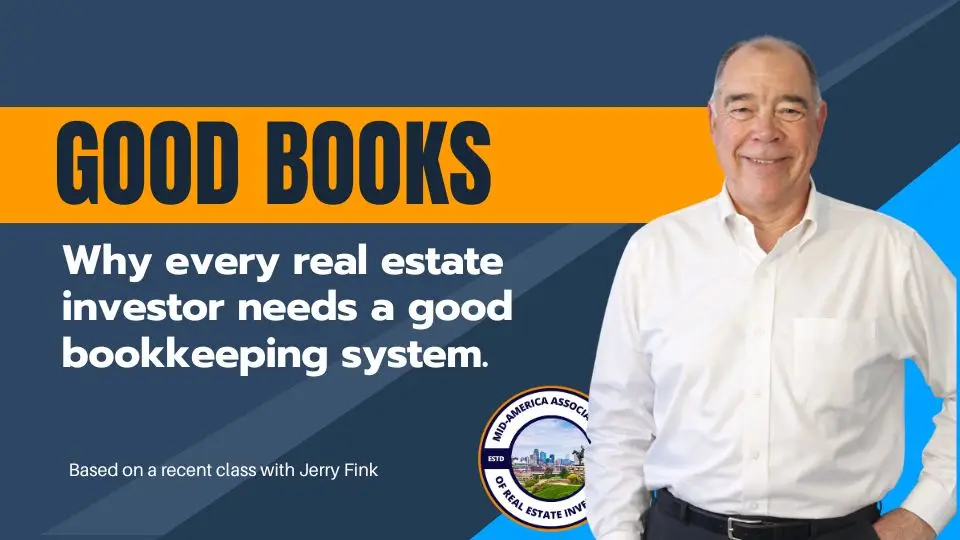
Did you catch that bookkeeping pop up last week with Jerry Fink? He’s an investor, retired CPA and he teaches QuickBooks for Investors. If you missed it, you’re in luck, we took notes.
One of his first points was scary, many investors still look at their bank balance as their main performance indicator. If there’s money in the account, things must be fine… right?
Not necessarily.
Cash in the bank doesn’t tell you:
- which property is actually profitable
- what a rehab really cost once everything is included
- how much you truly owe (or are owed)
- whether your “profit” is real or just timing
- how your business is trending year over year
Without clean books, those answers are mostly guesses.
Real Estate Is a Business (Whether You Treat It Like One or Not)
One of the biggest takeaways from the session was this simple reality:
Every real estate investor is a small business owner and will need:
- Real financial statements for lenders
- Accurate tracking to prepare taxes
- To know what’s actually happening to make good informed decisions.
Good bookkeeping isn’t about compliance for compliance’s sake. It’s about being able to see your business clearly enough to manage it.
Bad Books Don’t Just Create Headaches — They Can Cost Real Money
One example shared during the session really drove this home.
An investor had kept meticulous records — but they were manual and not structured correctly for real estate. When the same information was later entered into a proper accounting system and real reports were run, it became clear that key costs had not been deducted correctly on prior tax returns.
The result?
A significant tax overpayment that could have been avoided with better books.
Clean books don’t just make tax season easier. They help ensure you’re only paying what you actually owe — and not more.
Why Real Estate Bookkeeping Is Different
Another important theme was why “normal” bookkeeping often falls apart in real estate.
Real estate involves:
- properties moving from rehab to rental
- costs that belong in basis, not expenses
- sales that require proper cost-of-goods tracking
- notes, land contracts, options, and lending activity
- separating tax profitability from cash distributions
-
A bookkeeper can pay bills perfectly and still produce books that don’t reflect reality if the system isn’t set up correctly for how real estate actually works.
That’s why understanding the structure — even if you later delegate the work — is so important.
Clarity Changes How Investors Operate
What stood out most wasn’t any single accounting rule. It was how much better decision-making becomes when investors can answer basic questions confidently:
- What did this property really make?
- What does an average turnover cost me?
- Where is my money actually going?
- How does this year compare to last year?
- What can I safely reinvest or distribute?
Those aren’t accounting questions.
They’re business questions — and good books are how you answer them.
Learn More
Jerry Fink is teaching a full-day QuickBooks Online setup class for real estate investors through MAREI, focused on building books that reflect how real estate businesses actually operate.
Details are available on the MAREI Calendar at MAREI.org/Calendar.