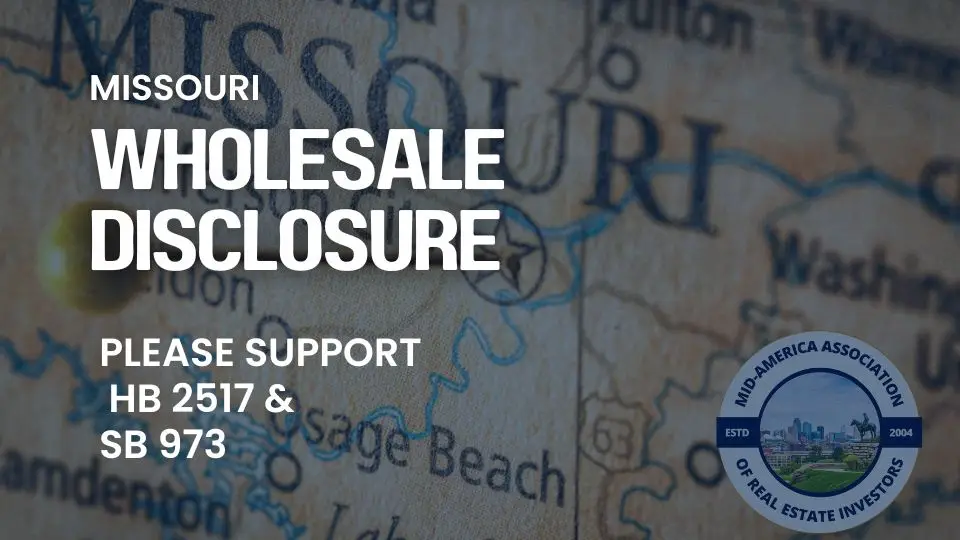
SB 973 Passed on the Final Day of the 2026 Legislative Session
This post tracks the full legislative history of SB 973 and HB 2517 from introduction through final passage. For a complete breakdown of what the law requires and what it means for your business, read our companion compliance post.
Read the Full Compliance Breakdown →MAREI has been tracking Missouri Senate Bill 973 and its companion House Bill 2517 since they were introduced in the 2026 legislative session. This post is the complete record of how these bills developed, what changed along the way, and how they ultimately passed in the final hours of the session. For what the law now requires of investors and wholesalers, see our full compliance post.
Why These Bills Were Introduced
Missouri's real estate wholesaling industry has grown significantly over the last decade. Along with that growth came an increase in consumer complaints — particularly from elderly, financially distressed, or first-time sellers who entered contracts with wholesalers without fully understanding how the transaction worked.
The core concerns that drove legislators to act included:
- Sellers signing contracts without understanding the buyer intended to assign them for profit rather than purchase the property themselves
- Purchase prices significantly below market value, agreed to by sellers who were not aware they had other options or who felt pressured to sign quickly
- Contracts assigned to third parties without the seller's knowledge or meaningful consent
- Affidavits of equitable interest filed against properties to cloud title on deals that ultimately fell through, leaving sellers unable to move forward
- Properties marketed publicly on social media by investors who did not yet own or control them
- Sale leaseback transactions where homeowners sold their homes and agreed to lease them back without fully understanding the consequences — including potential eviction and permanent loss of the right to repurchase
Both bills were designed to bring transparency to these transactions — not to ban wholesaling, but to ensure sellers understood who they were dealing with and how the transaction worked before signing anything.
HB 2517 and SB 973 — What Each Bill Said
Two companion bills moved through the legislature simultaneously. They were substantively similar but with one important difference.
| Provision | HB 2517 (House) | SB 973 (Senate) |
|---|---|---|
| Sponsor | Rep. Chris Brown | Sen. Curtis Trent |
| Written wholesaler disclosure required | ✅ Yes | ✅ Yes |
| 14-day advance disclosure window | Not specified | ✅ Yes — 14 calendar days before contract execution |
| Seller cancellation right if no disclosure | ✅ Yes | ✅ Yes |
| Earnest money to seller on cancellation | ✅ Yes | ✅ Yes |
| Missouri Merchandising Practices Act enforcement | ✅ Yes | ✅ Yes |
| Missouri Residential Sale Leaseback Protection Act | Not included | ✅ Yes — full sale leaseback disclosure and 30-day waiting period |
| Delinquent tax and land bank reforms | Not included | ✅ Yes — extensive amendments to Chapters 140 and 141 |
How the Bills Moved Through the Legislature
-
Early 2026Bills IntroducedSenator Curtis Trent introduced SB 973 in the Missouri Senate. Representative Chris Brown introduced companion bill HB 2517 in the Missouri House. Both bills proposed mandatory written disclosure requirements for real estate wholesalers operating on residential 1–4 unit properties.
-
March 5, 2026SB 973 Engrossed in SenateSB 973 was engrossed in the Missouri Senate — meaning it passed its Senate committee process and was prepared for full Senate consideration with any adopted amendments incorporated into the bill text.
-
April 9, 2026HB 2517 Passes the House 130–6The companion House bill passed the Missouri House of Representatives by an overwhelming 130 to 6 vote, signaling broad bipartisan support for wholesaler disclosure legislation. The bill was referred to the Senate General Laws Committee on April 21, 2026.
-
Late April 2026SB 973 Moves Through House Rules CommitteeSB 973 continued moving through House committee action, including the Rules — Administrative Committee, as the end of the legislative session approached.
-
May 2026 — Final Days of SessionConference Committee Substitute DevelopedA conference committee substitute was developed — the version of the bill that resolved differences between House and Senate versions. The final enrolled bill is formally titled: Conference Committee Substitute for House Committee Substitute for Senate Substitute for Senate Committee Substitute for Senate Bill No. 973.
-
May 15, 2026 — Final Day of Session✅ SB 973 Passes Both Chambers — Truly Agreed and Finally PassedIn the final hours of Missouri's 2026 legislative session, SB 973 cleared both chambers in its truly agreed to and finally passed (TAFP) form. The bill now awaits action by Governor Kehoe, who has until July 15, 2026 to sign, veto, or allow it to become law without signature. If enacted, the effective date is August 28, 2026.
What the Final Version of SB 973 Contains
The truly agreed to and finally passed version of SB 973 contains three major areas of change for real estate investors and consumers in Missouri:
1. Mandatory Wholesaler Disclosure Requirements
Any person meeting the definition of a wholesaler — someone who enters a purchase contract on residential 1–4 unit property with the intent to assign or novate it for profit — must now provide a standalone written disclosure to the seller at least 14 calendar days before any contract is executed. Failure to comply allows the seller to cancel at any time before closing and entitles them to the wholesaler's earnest money. Violations are enforceable under the Missouri Merchandising Practices Act.
2. Missouri Residential Sale Leaseback Protection Act
A completely new consumer protection statute governing transactions where a homeowner sells their residence and simultaneously agrees to lease it back. Requires a 14-day advance disclosure, a signed disclosure at the time of signing the agreement, and a mandatory 30-day waiting period before title can transfer. Read together, the two waiting periods create a minimum of 44 calendar days from first disclosure to earliest possible closing. Penalties include up to $10,000 per violation plus $10,000 in statutory damages on top of actual damages.
3. Delinquent Tax and Land Bank Reforms
Extensive amendments to Missouri's delinquent property tax collection and land bank agency governance framework. Most notable for investors: property owners lose their right of redemption with no waiting period on residential properties that have been vacant for at least six months prior to a foreclosure judgment. New sheriff's sale notice requirements were also strengthened.
Ready to Understand What This Means for Your Business?
Our companion compliance post covers the wholesaler definition, assignment vs. novation, the double close question, the 44-day sale leaseback timeline, the earnest money reversal, and the industry debate — with a free downloadable Client Advisory Brief.
Read the Full Compliance Breakdown →Stay Informed on Missouri Real Estate Law
Governor Kehoe has until July 15, 2026 to act on SB 973. Get MAREI's email updates and be the first to know when the law is signed, when it takes effect, and what compliance steps you need to take before August 28.
Join the MAREI Email List
Advocacy
More on the Issues